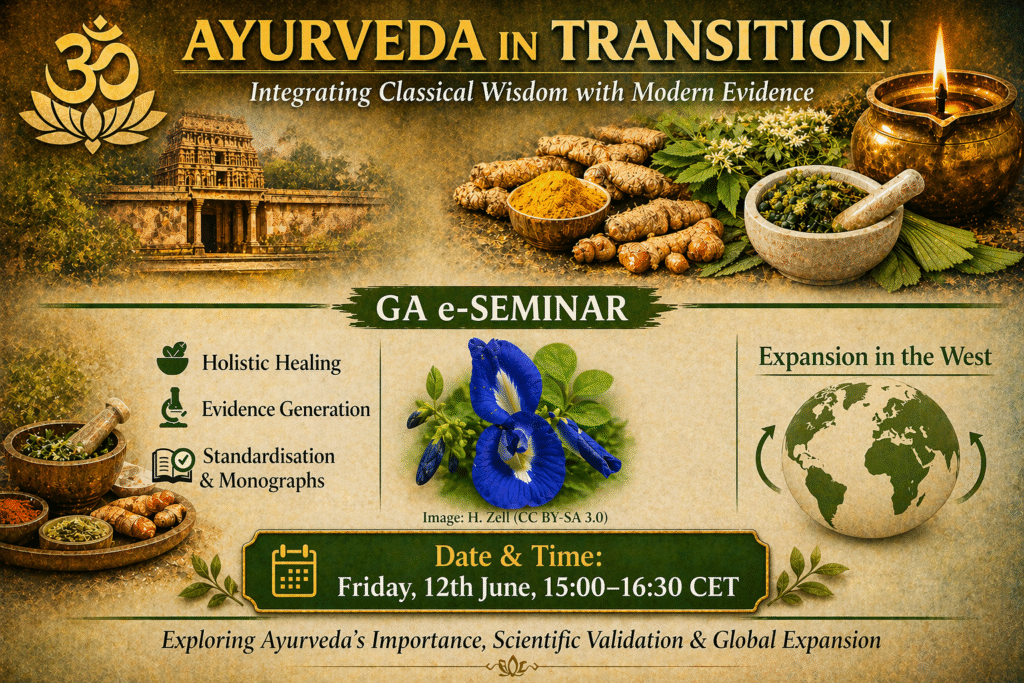
Ayurveda, a traditional system of medicine originating in India over 5,000 years ago, remains a cornerstone of the country’s integrative healthcare system. It adopts a holistic approach to health, encompassing physical, psychological, and social well-being, and emphasizes balance through prevention, lifestyle regulation, and therapeutic interventions including herbal medicines, diet, and mind–body practices.
It has become a globally used healthcare practice, however, often the evidence base remains unclear and as with many other practices there are concerns relating to the quality assurance of the products used, if these are not regulated as medicines. At the same time, it offers diverse opportunities esp. in the context of chronic conditions. This e-seminar aims to explore the evolving role of Ayurvedic knowledge in a modern scientific context, with a particular focus on medicinal plants. It will highlight both the enduring significance of Ayurvedic herbs in India and the growing need for their scientific assessments, standardisation, and regulatory alignment for global acceptance.
Speakers: The seminar will feature three complementary perspectives that collectively address the transition of Ayurveda into a modern, evidence-driven framework.
 Ravindra Singh, Assistant Director In Charge Central Ayurveda Research Institute, Jhansi, India
Evidence based Ayurveda
 Andreas Hensel, University of Münster, Germany
Requirements for herbal materials entering the Western drug market
 Ikhlas Khan, University of Mississippi, USA
Scientific Pathways for Ayurveda through Natural Products Research
Please use this link to register for free.