
Dr. Willmar-Schwabe-Young-Talent-Prize
The aim is to motivate young talents to address phytochemical and phytopharmacological questions, especially with potential clinical implications, in order to advance our understanding of the therapeutic potential of natural products.
Bestowed annually during GA conference
- Awarding Institution: Society for Medicinal Plant and Natural Product Research (GA)
- Endowing Sponsor: Dr. Willmar Schwabe GmbH & Co. KG, Karlsruhe (Germany)
- Endowment: 2,000 EURO
Application
- PhD students & Postdocs (normally 30 years or younger)
- GA membership for at least one year prior to application, with paid fees
- At least one peer-reviewed publication as 1st author is available and is being submitted as basis for the assessment (can be augmented by additional papers from the same topic), which is being accompanied by an
- application letter outlining the overarching research strategy (in hindsight and forward-looking) for the topic under evaluation
Jury
President of GA & nominee of the GA president & Schwabe representative, based on an evaluation report (evaluator/s selected by the GA president)
Applications shall be sent to our Scientific Officer.
List of Award Winners
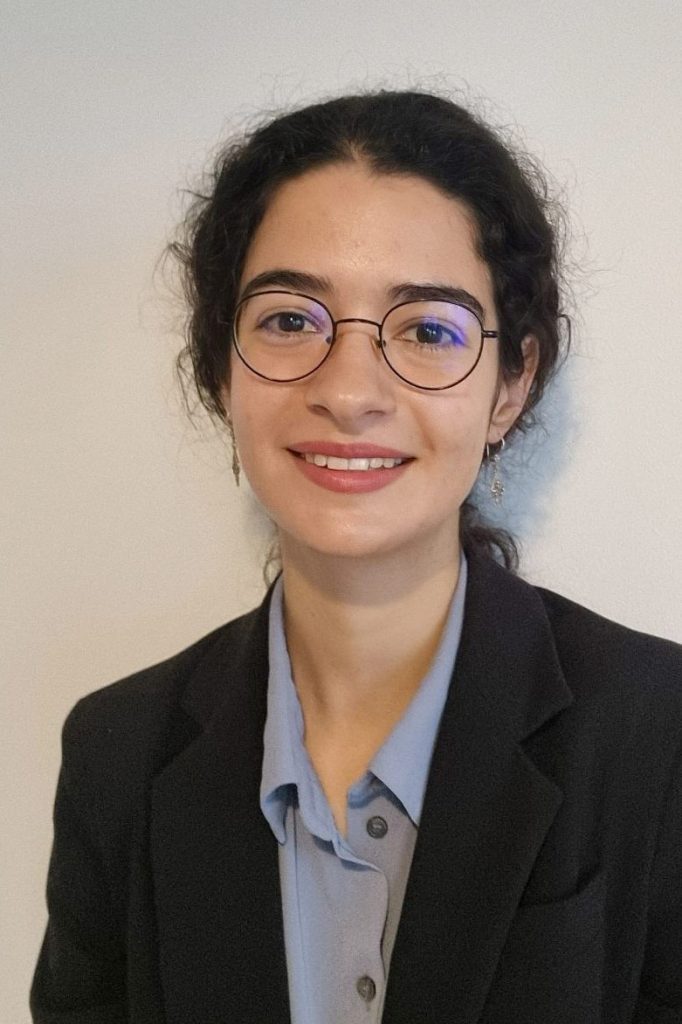
2025: Dr Maria Eleni Grafakou
Dr. Maria-Eleni Grafakou received her PhD from the Department of Pharmacognosy and Chemistry of Natural Products, School of Pharmacy, National and Kapodistrian University of Athens, Greece, and then worked as a PostDoc at the Institute for Pharmaceutical Sciences, Pharmacognosy Department, University of Graz, Austria. Her research focuses on the biotransformation of natural products, with particular emphasis on the bidirectional interactions between medicinal plants and the gut microbiome. She has elucidated key hepatic and gastrointestinal metabolic pathways of plant secondary metabolites, using advanced LC-HRMS-based metabolomics, identified microbiota-derived metabolites with links to mental health and demonstrated plant-induced modulation of gut microbial composition, supporting a role for the microbiome–gut–brain axis in mediating pharmacological effects (e.g. for Hypericum perforatum).
Currently, as a PostDoc at the Chair of Pharmaceutical Biology, University of Regensburg, Germany, Dr. Grafakou investigates the pharmacological activity of biotransformed medicinal plant extracts in cell-based models. Her vision is to deepen the understanding of how plant–microbiome interactions shape the therapeutic effects of medicinal plants, in order to further enhance their role in healthcare and drug development.

2024: Dr Cherry Lifeng Li
Dr. Cherry Lifeng Li is a Research Assistant Professor at the Teaching and Research Division of the School of Chinese Medicine at Hong Kong Baptist University. With expertise in quality control, structural characterization, and research on in vivo fate and metabolic tracking of natural polysaccharides, she has made significant contributions to the field. Li has authored 27 SCI papers, with individual citations exceeding 104, demonstrating her impact on the scientific community. Her H-index of 10 reflects the quality and influence of her research. Additionally, she holds 8 patents, both domestically and internationally, showcasing her innovative work. Her research focus is currently on exploring natural polysaccharide-protein interactions and developing a nature-sourced polymer-based drug delivery system.

2023: Dr Adriano Rutz
Dr. Adriano Rutz is a pharmacist by training.
After working in the analytical research laboratory and R&D department of Tradall SA (Bacardi Group), he obtained his PhD in phytochemistry at the University of Geneva, under the supervision of Professor Jean-Luc Wolfender.
As an advocate of open science and open data, he is the proud author of the LOTUS initiative, a new way of sharing knowledge in the field of natural products research.
This initiative is a cornerstone of phytopharmacological research. Based on the valuable knowledge built over 100 years of phytochemical studies, LOTUS has the potential to facilitate the incorporation of natural products in the era of informatics. The LOTUS initiative promises to strengthen the foundations on which future phytochemical investigations will be conducted and helps building bridges to other fields. It is designed to efficiently inform machine learning strategies in the best circumstances. Its use can range from taxonomically informed metabolite annotation, to finding structural novelty, providing molecular arguments for biodiversity conservation up to guiding drug discovery for various diseases.
Adriano Rutz’s current research as a PostDoc (ETH Zurich) focuses on the development of open informatics tools and mass spectrometry-based strategies to better understand the chemistry of living organisms.